
Española Island is the oldest volcanic island of the Galapagos group.
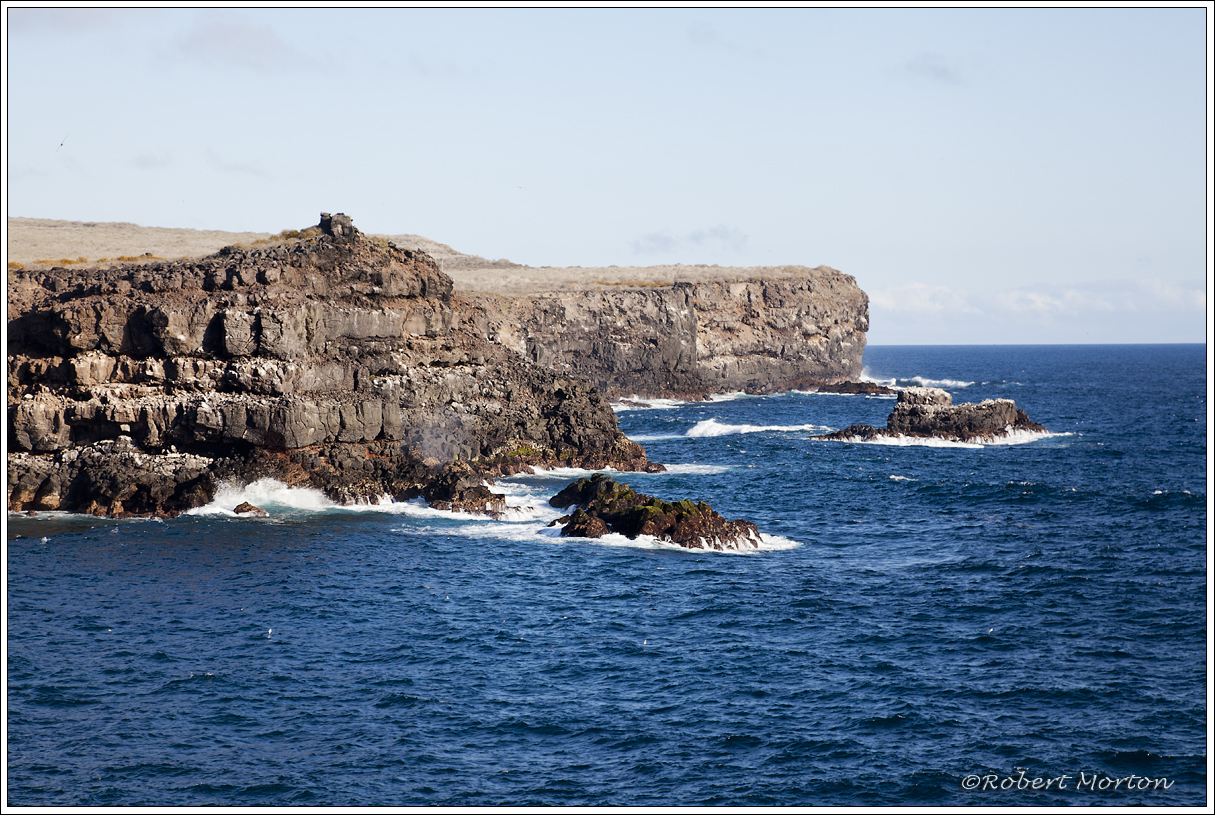
The cliffs provide seabird habitat as the island slowly wears away from the incessant pounding of the waves.
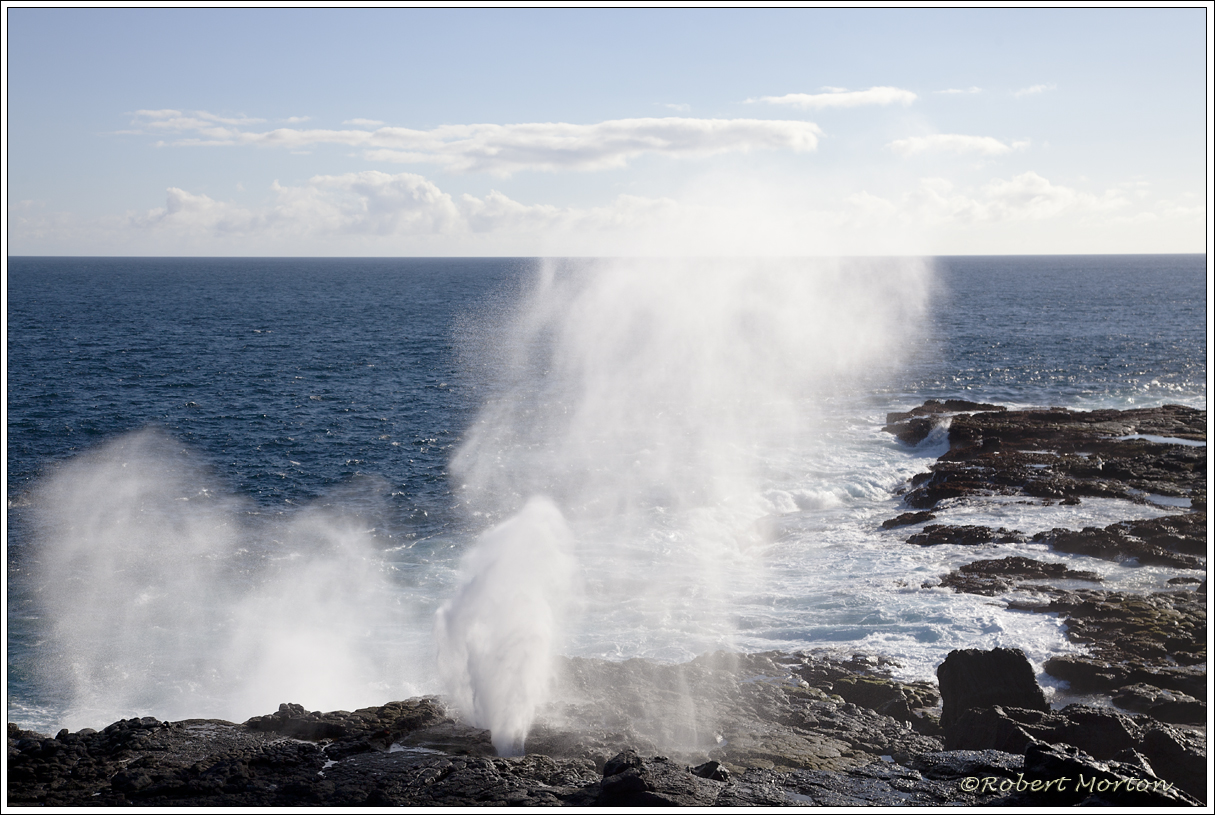
This blowhole was quite spectacular on a relatively calm day.
Española Island is the oldest volcanic island of the Galapagos group.
The cliffs provide seabird habitat as the island slowly wears away from the incessant pounding of the waves.
This blowhole was quite spectacular on a relatively calm day.
Filed under Photographs
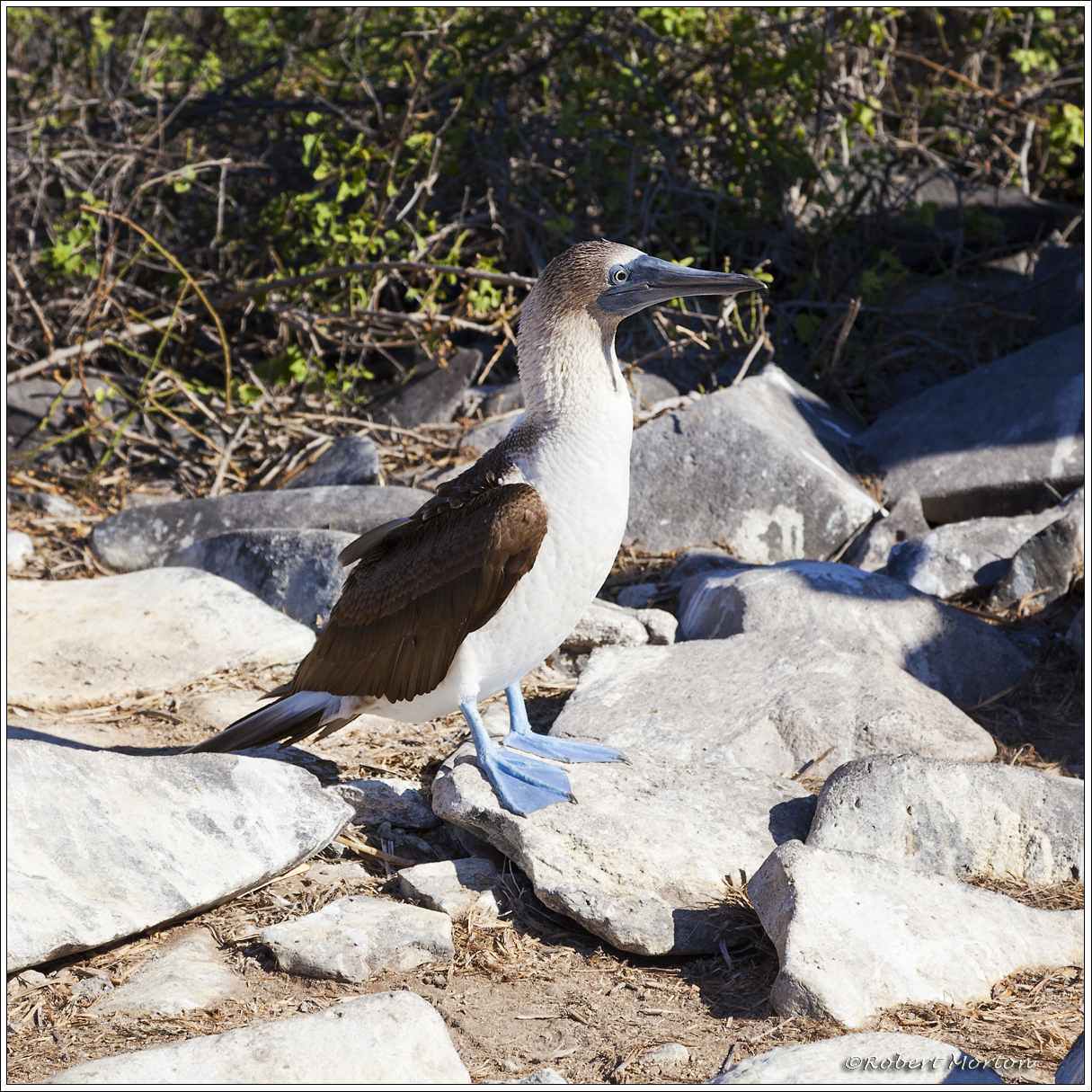
Yesterday’s Blue Footed Booby turned out to be a mother. When she landed in the middle of our trail, her chick came waddling out of the scrub and we watched for some time as the chick coaxed her to feed it.


After a great deal of begging, the chick stayed hungry. Mom was not cooperating.
Filed under Photographs
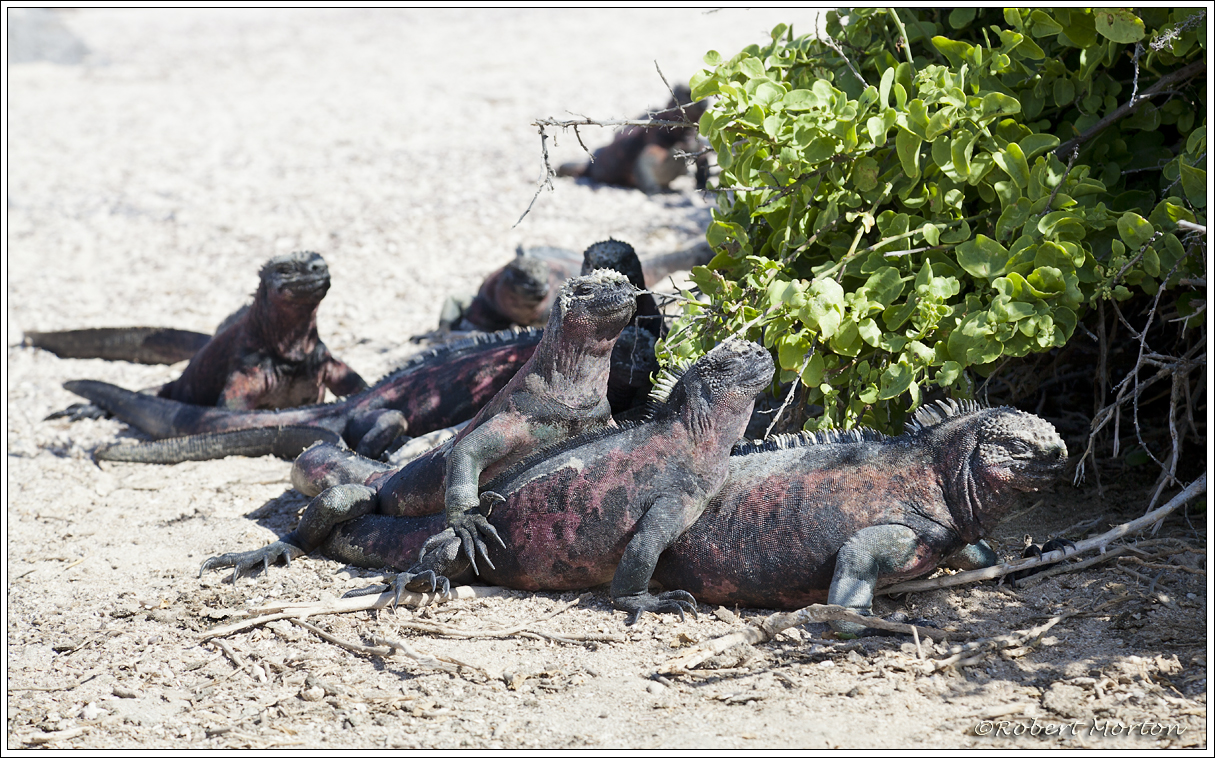
Marine Iguanas Warming In the Sun
Marine Iguanas are cold blooded and depend on the environment to regulate their body temperature. They become very lethargic when temperatures are lower. Grouping together while lying in the sun collects and preserves the heat they need to be able to move quickly.
Filed under Photographs
Nazca Boobies are particularly photogenic.


The origin of the name “Booby” is discussed Here . They really do show little fear.
Filed under Photographs
This is the definition of “curious” when you look in the dictionary.
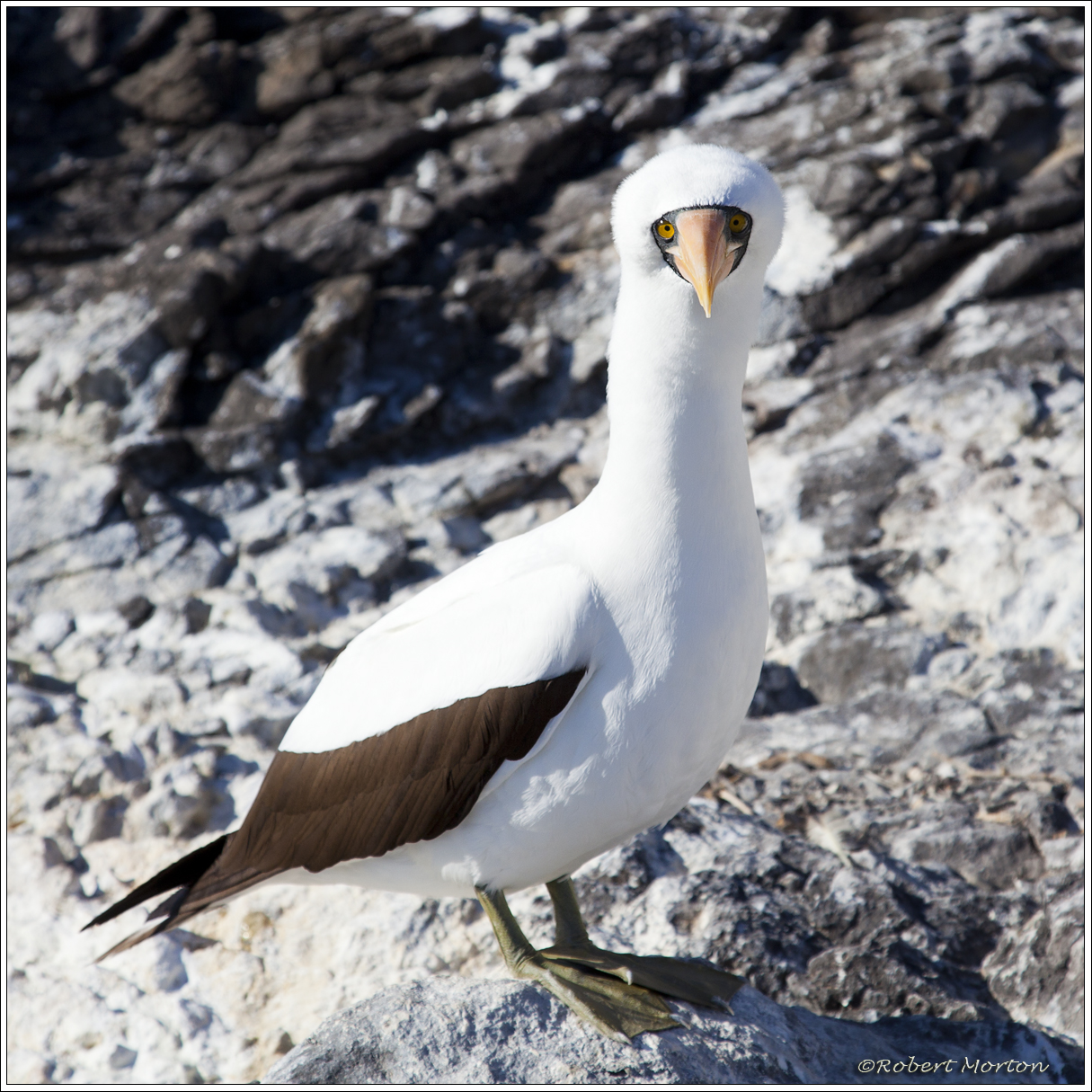
The bird is a Nazca Booby on Española Island, Galapagos.
It was working with its’ partner making a nest in the middle of the trail. We detoured slowly, not disturbing them.
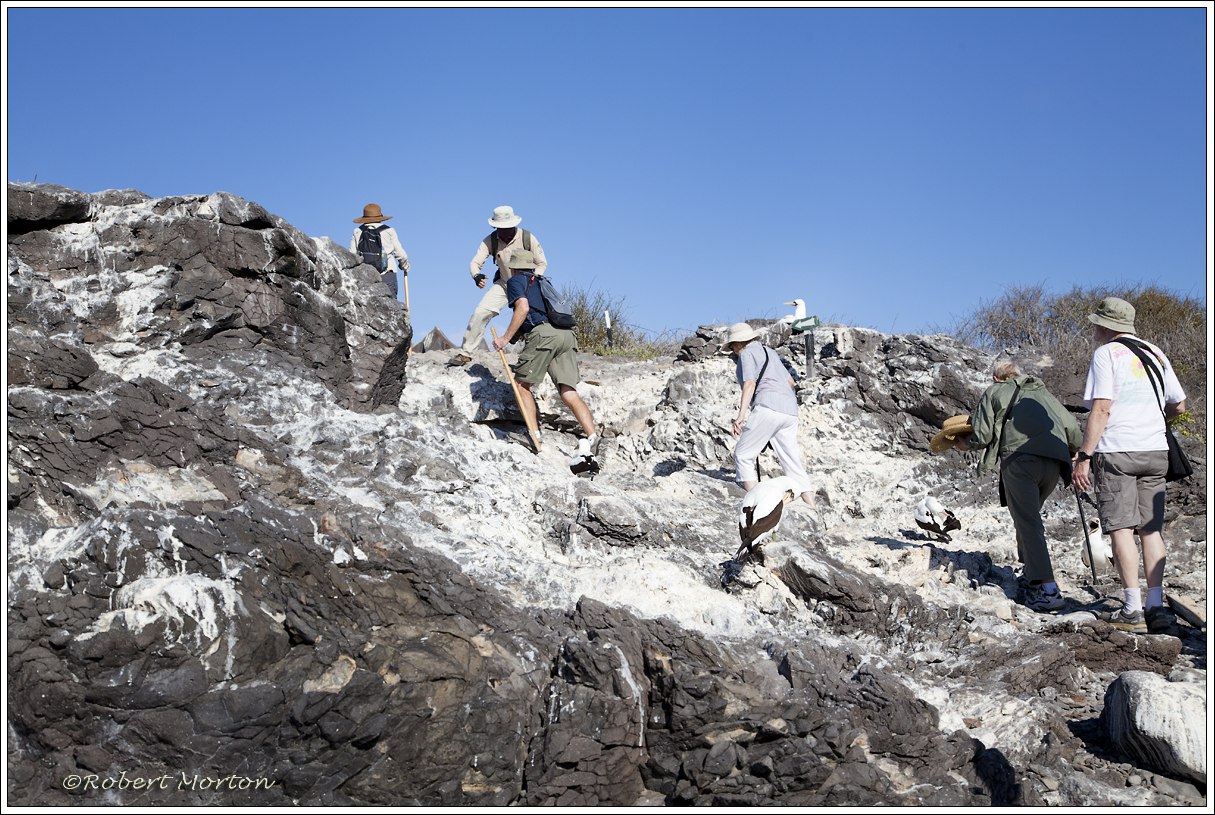
The white material is called locally “Galapagos snow”.
Filed under Photographs
The walk along the beach of Gardner Bay on Española Island provided a great opportunity to make photographs of the animals that inhabit the beach.


The animals are quite unafraid, making it possible to get quite close for photographs. Note the polka-dot running shoes in the photo of the little Española Mockingbird. This is their world, not ours.
Filed under Photographs
Gardner Bay on Española Island in the Galapagos has a marvellous beach. Several zodiacs were launched from the mother ship and people experienced a “wet landing” on the beach. After walking the beach and seeing lots of wildlife, those who wished were able to swim and snorkel in the relatively warm water.


Lots of wildlife on the beach and quite unafraid of the people. The word on visitor behaviour is to move slowly and gently and stay 2 metres away from the wildlife. No touching or petting allowed. Sea Lion moms identify their pups by smell. Touching a baby sea lion could mean rejection by the mother and death for the youngster because of the strange scent (sunscreen, bug repellent…) we leave behind on the pup. This is their home you are visiting and one must respect it.
The guides and zodiac drivers protect themselves from the strong equatorial sun (by wearing masks and long sleeves for example) as they work in it day after day.
Filed under Photographs
How’s it going kid?
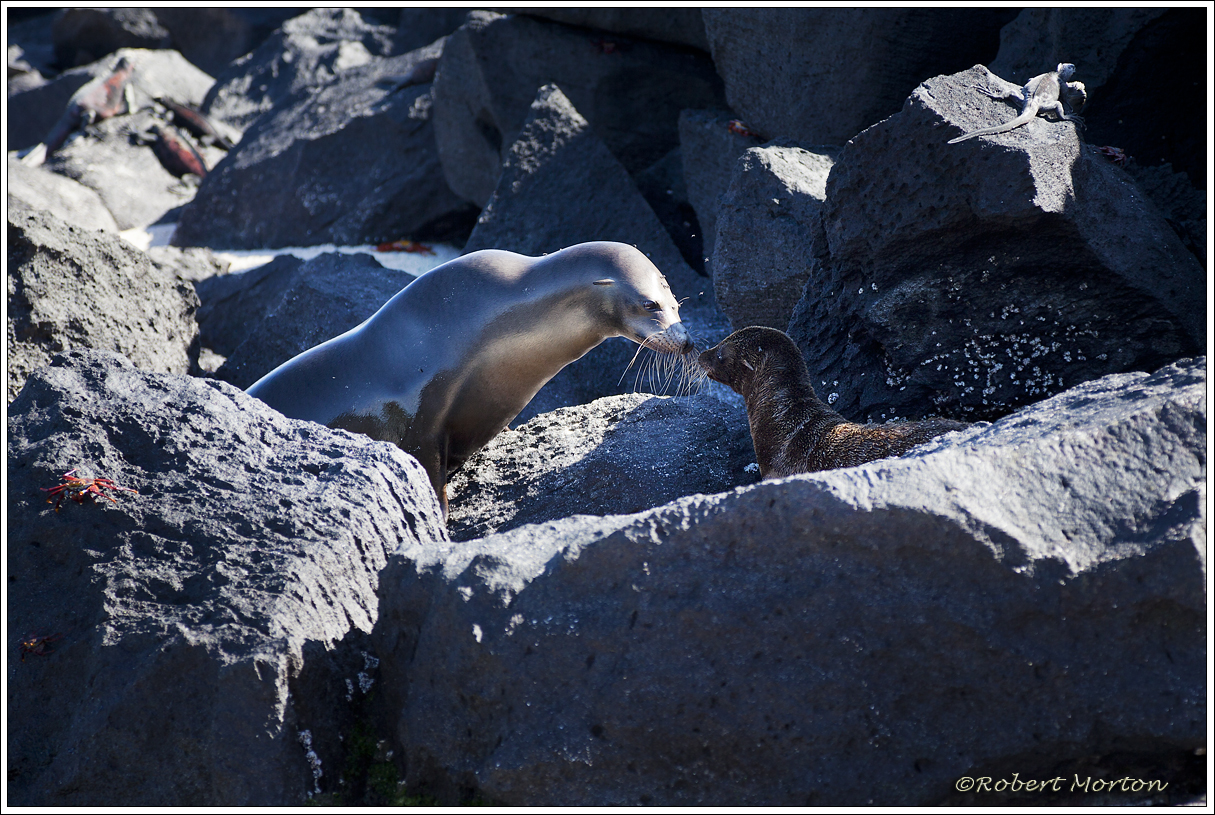
Sea lions in the lava rock near the beach. Other wildlife as well.
Gardner Bay, Espanola Island, Galapagos.
Filed under Photographs
This was my first encounter with a Frigate Bird resting on a branch above the beach.
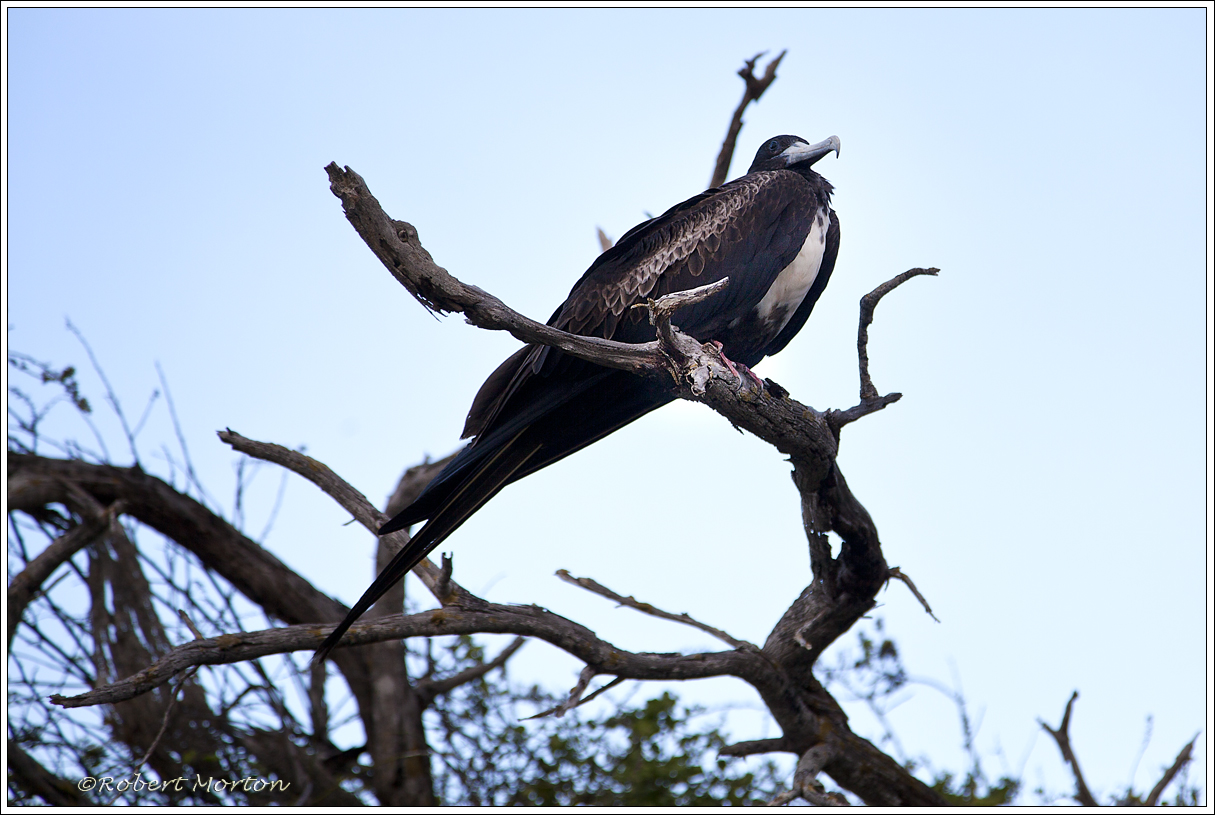
They soar in the wind when they are not taking time out.
Filed under Photographs
… for you!

The first of many hundreds of sea lions who ignored our presence.
Filed under Photographs
This is one of the first birds we saw on our visit to San Cristobal Island in the Galapagos.

This guy was totally unafraid as he flitted among the thorns not five feet away from us.
Filed under Photographs
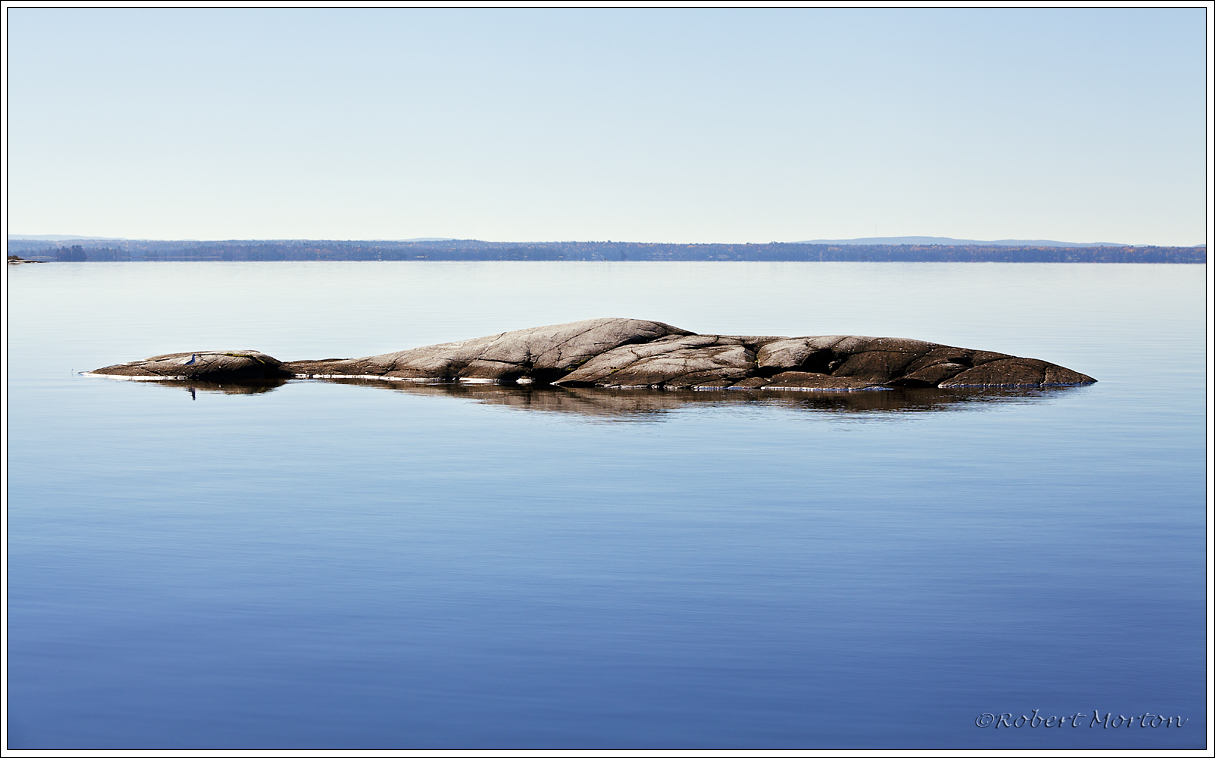
The cove on Trout Lake.
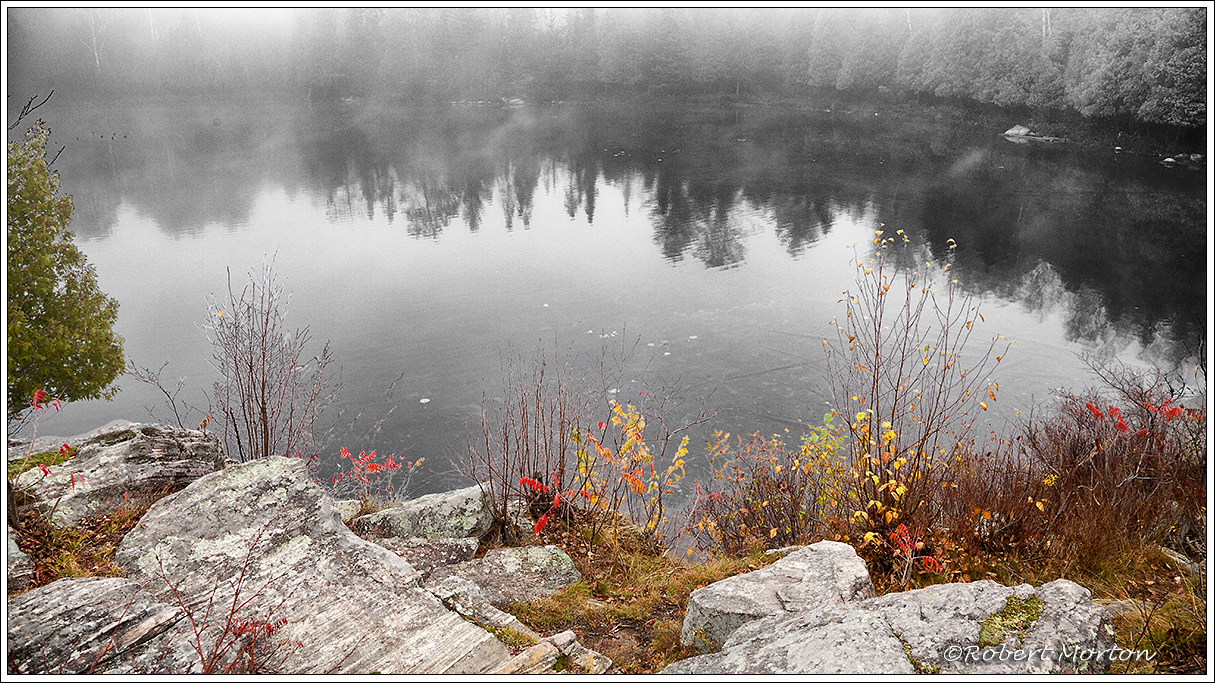
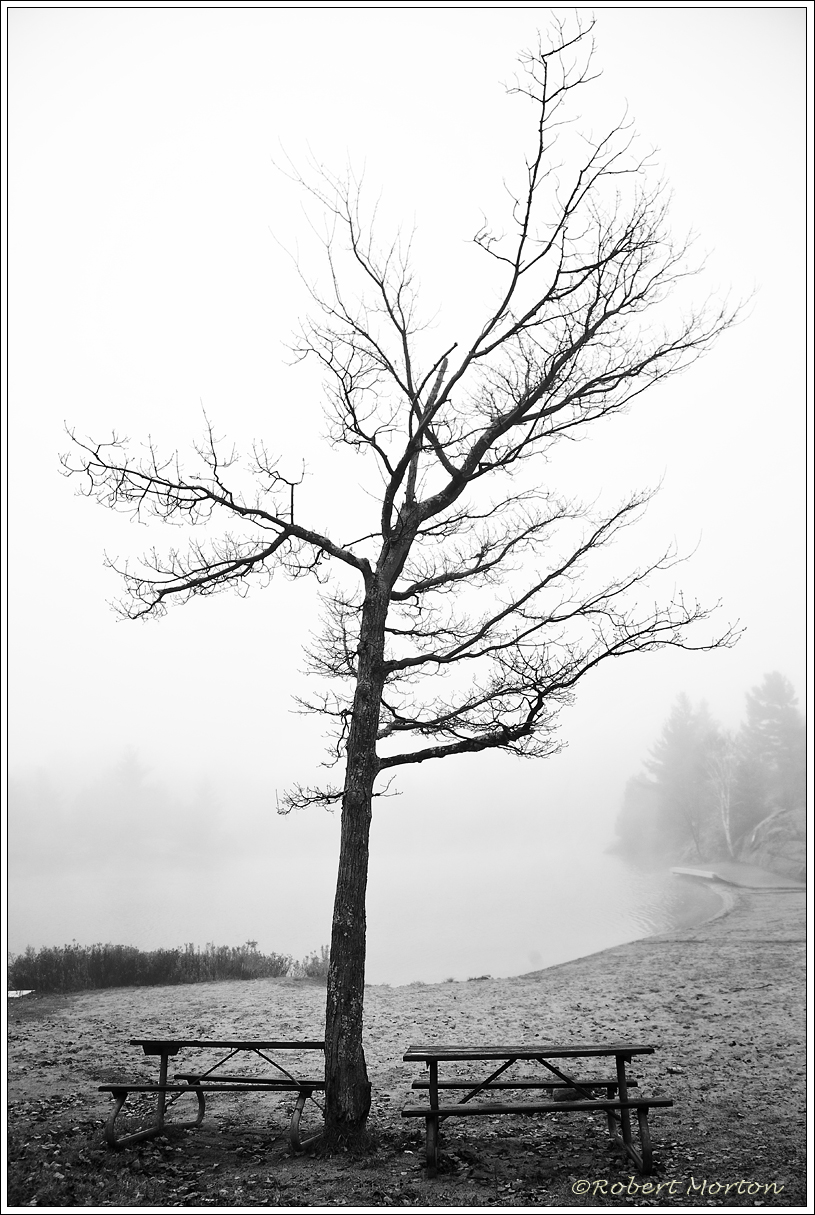
The fading colour of fall is becoming the monochrome of winter.
Filed under Photographs
 photodyssey